



Houston’s underground infrastructure carries a burden that most of the country does not fully appreciate. The city sits on one of the most geologically active urban foundations in the United States, where soils expand, contract, and slowly sink, and the pipe systems buried beneath them absorb every movement.
For contractors and engineers working on trenchless pipe rehabilitation across Houston, Harris County, Fort Bend County, and the surrounding metro area, CIPP liner thickness is a decision with consequences that extend well beyond the installation date. In this environment, the margin a liner provides is not a comfort factor. It is a structural necessity.
What Makes Houston’s Underground Environment Unlike Any Other
The dominant soil type across much of the Houston metro is Beaumont Clay, one of the most expansive clay formations in the country. It swells dramatically when saturated, which happens frequently in a region that averages more than 50 inches of rainfall annually, and it contracts hard during dry periods. That cycle of expansion and contraction places continuous, variable loading on host pipes and the liners inside them, loading that does not appear in standard ASTM design tables built around more stable soil profiles.
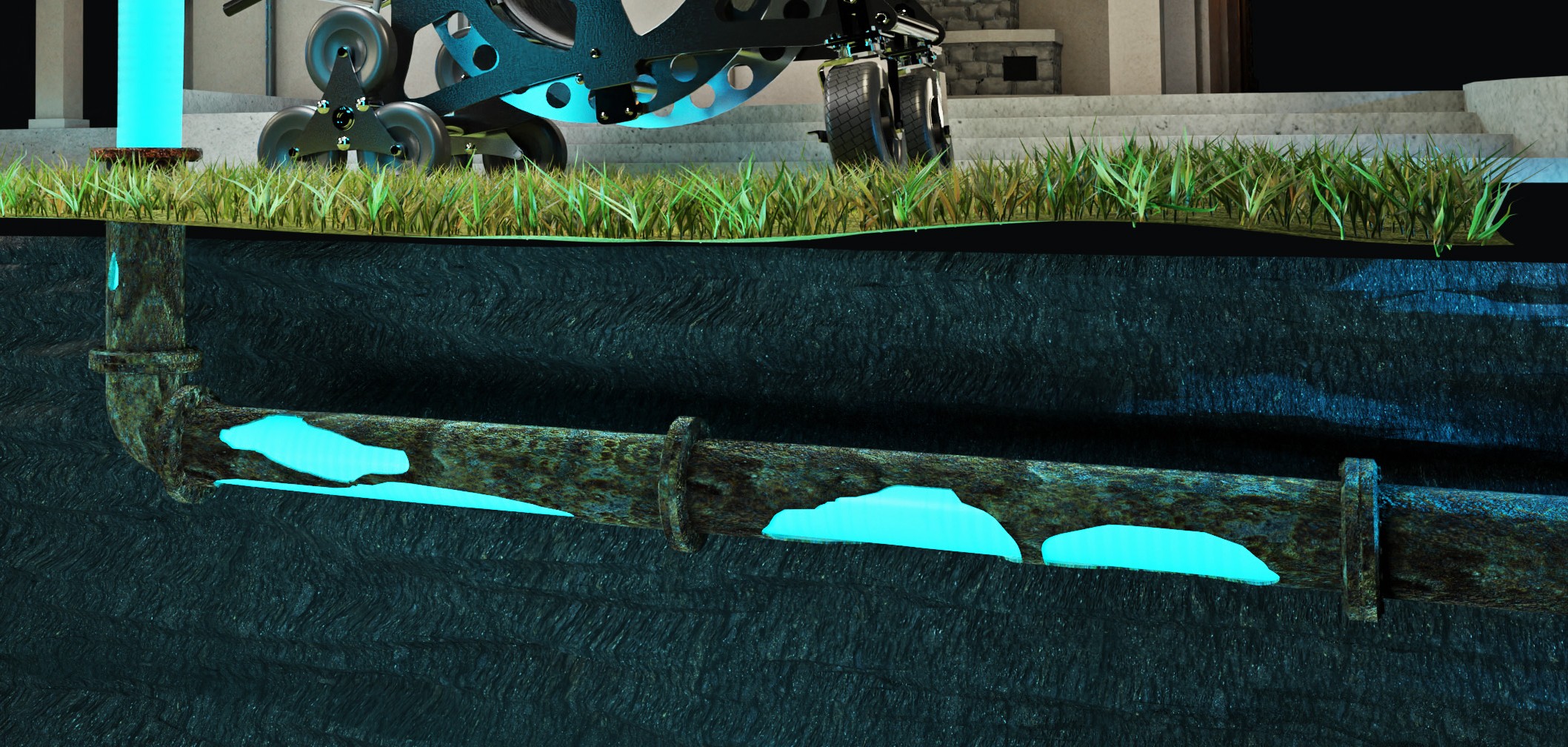
Land subsidence adds a dimension that is unique to the Gulf Coast. Parts of Harris County have subsided multiple feet over the past century due to groundwater extraction and natural compaction processes. That slow, ongoing ground movement stresses pipe joints, opens cracks, and drives host pipe ovality in ways that are difficult to fully capture in a pre-mobilization assessment. A 2mm cured-in-place pipe liner operating near minimum ASTM F1216 thresholds on a host pipe in a subsidence zone has very little structural headroom when the ground keeps moving after installation.
Houston’s heat and humidity accelerate deterioration faster than most northern markets account for. Hydrogen sulfide corrosion in warm, wet, oxygen-limited sewer environments degrades pipe walls at rates that shorten the effective service life of already aging infrastructure significantly.
The Load Factors Houston Installers Cannot Ignore
When evaluating CIPP liner thickness for a Houston or Harris County project, the structural loading environment includes:
- Beaumont Clay expansive soils placing continuous and variable lateral and vertical pressure on host pipes throughout the metro area
- Active land subsidence in parts of Harris, Galveston, and Brazoria County creating ongoing differential ground movement
- High water table levels across much of the city, driving sustained hydrostatic pressure on buried pipe systems
- Hydrogen sulfide corrosion accelerated by Houston’s heat, humidity, and flat-grade sewer flow conditions
- Heavy vehicle and freight loads across one of the country’s largest and most heavily trafficked surface street networks
- Aging clay, concrete, and cast iron host pipes throughout older Houston neighborhoods and inner-loop corridors, many of them severely past their design service life
- City of Houston and Harris County Flood Control specifications reflecting the region’s consent decree-driven long-term performance requirements
A 2mm CIPP liner may satisfy minimum ASTM F1216 requirements under favorable conditions. Houston’s underground does not offer favorable conditions.
Why the Post-Harvey Recovery Context Still Matters Today
Hurricane Harvey’s 2017 impact on Houston’s underground infrastructure was not a single event. It was a stress test that exposed decades of deferred maintenance, undersized capacity, and pipe systems operating well beyond their intended service life. The rehabilitation pipeline that Harvey accelerated is still running, and the IIJA funding flowing through Harris County Flood Control and the City of Houston’s capital improvement programs has added significant velocity to that work.
For contractors, that represents one of the most sustained and well-funded rehabilitation markets in the country. It also represents a market with experienced municipal engineering reviewers who have had years to observe which installations hold up and which ones do not. A liner that underperforms on a City of Houston consent decree project or a Harris County Flood Control job does not fade quietly. It becomes part of your documented performance record in a market that keeps score.
Why 3mm Is the Right Specification for Houston Work
A 3mm CIPP liner provides the structural margin that Houston’s underground conditions demand. The advantages are direct and specific to this market:
- Greater resistance to the sustained and variable soil pressure from Beaumont Clay expansion and contraction cycles
- Improved sewer liner structural capacity in deteriorated host pipes weakened by hydrogen sulfide corrosion and subsidence-driven deformation
- More installation forgiveness when land subsidence creates ground movement conditions that differ from pre-job assessments
- Enhanced long-term pipe liner durability in a hot, humid, corrosive underground environment where degradation rates exceed national averages
- Reduced callback exposure and stronger warranty standing on consent decree and Harris County Flood Control rehabilitation contracts
- Defensible CIPP structural requirements for City of Houston engineering review and TCEQ compliance documentation
For engineers writing specifications on Houston rehabilitation contracts, 3mm is the recommendation that accounts for what this underground actually delivers over a twenty-year performance horizon.
The Calculation That Closes the Question
ASTM F1216 liner calculations account for soil loading, burial depth, groundwater, and host pipe condition at the time of installation. What they don’t automatically account for is the incremental stress from land subsidence that continues after the liner is cured. In parts of Harris County where the ground is still moving, a calculation that captures conditions at installation is a starting point, not a complete picture. Running site-specific calculations with accurate subsidence data built in is the difference between a specification that holds over twenty years and one that doesn’t.
Before specifying a 2mm liner on any Houston project, one question needs a clear and documented answer: Have the ASTM F1216 calculations been completed for this specific installation?
If the answer is no, the right liner is already determined. Install 3mm.
Build for What Houston’s Ground Does to Infrastructure
Houston’s rehabilitation market is large, funded, and operating under long-term federal accountability through active consent decree programs. The contractors and engineers building durable performance records here are positioned to work steadily for years. Those cutting corners on liner thickness are building a warranty and compliance exposure problem instead.
The clay moves. The ground sinks. The heat and humidity never let up.
Build for it. Install 3mm.