




Houston’s underground works against gravity and geology at the same time. Expansive gumbo clay soils across Harris County swell and shrink with every rain cycle, and a flat coastal topography leaves the collection system with little natural drainage advantage during major storms.
For engineers and contractors managing sewer rehabilitation across Houston and Harris County, inflow and infiltration (I&I) is a recurring pressure point tied directly to hurricane season and heavy rain events. Houston Water’s consent decree work has kept I&I reduction central to capital planning since Hurricane Harvey exposed just how much stress the collection system can absorb in a single event.
Two Routes In, One Overloaded Network
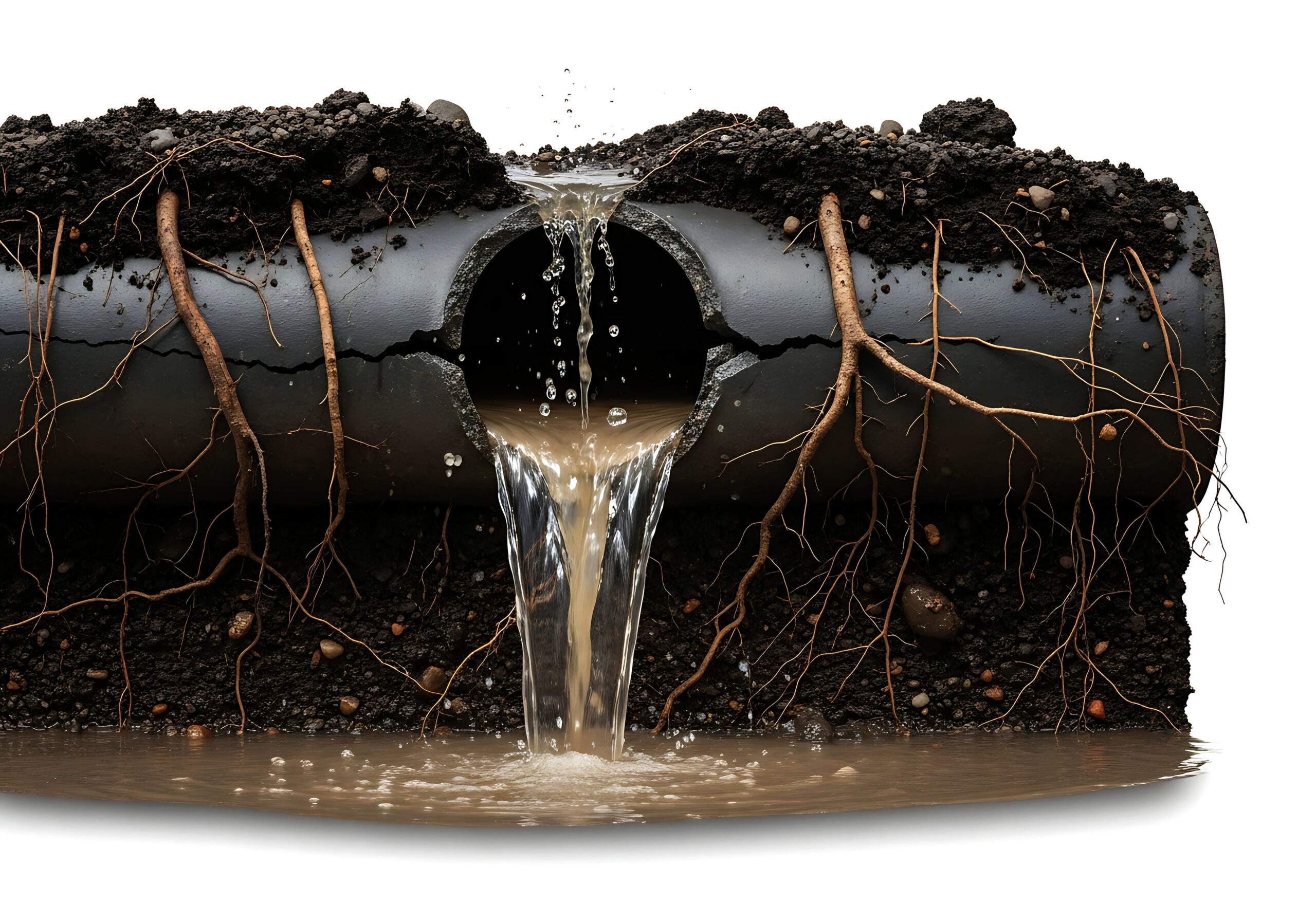
Groundwater finds its way into Houston’s collection system through cracked pipes, failed joints, and deteriorated manhole structures, the classic infiltration pathway. Inflow takes a shortcut, entering through roof drains, foundation drains, and other connections feeding straight into the sanitary system.
Both draw down sewer capacity fast when tropical systems dump inches of rain in hours. Houston’s flat terrain slows drainage everywhere, so a wastewater collection system already carrying excess I&I has almost nowhere for that extra flow to go.
Gumbo Clay Doesn’t Wait for Your Next Inspection
Houston crews rely on CIPP to renew deteriorated mains beneath major corridors without shutting them down for excavation, a practical fix for the trunk line itself. The gumbo clay underneath the rest of the network doesn’t care that the main got fixed.
Lining a main in Houston doesn’t always produce the infiltration drop crews expect, because the expansive gumbo clay underneath swells and shrinks with every wet-dry cycle on its own schedule. A joint that held through a dry summer can separate the moment the season’s first major storm hits, independent of the mainline’s condition.
Common infiltration sources across Houston’s neighborhoods include:
- Deteriorated laterals beneath older Heights and Third Ward properties
- Failed main-to-lateral connections stressed by expansive clay movement
- Cracked host pipes weakened by repeated soil swelling and shrinkage
- Manhole joint failures allowing groundwater intrusion near bayou corridors
- Root intrusion into aging clay and concrete pipe common throughout Houston’s older neighborhoods
Pinpointing the Source Before Mobilizing Crews
Because gumbo clay moves with every wet-dry swing, a single dry-weather inspection often misses the problem entirely. Running CCTV, flow monitoring, and smoke testing across both conditions is what actually confirms whether the leak sits at the main, the lateral, the connection, or the structure.
The rehabilitation approach should match the defect found: mainline CIPP for trunk-line deterioration; full-length lateral lining for a compromised service line; connection-specific rehab where clay movement has separated a joint; structural manhole work where bayou-adjacent groundwater pressure has cracked a structure; and injection grouting for a small, active, isolated leak.
What’s at Stake for Engineers and Contractors
Houston Water operates under an active consent decree with defined performance milestones, which puts real pressure on controlling the cost of pumping and treating unwanted groundwater. Sewer overflows during heavy rain carry real regulatory consequences in a city that has faced repeated tropical storm impacts on its collection system.
A system this exposed to expansive clay and hurricane-driven rainfall needs a capacity management approach built around the whole network, not isolated pipe repairs. A well-installed liner protects the mainline through the next storm season; it’s the laterals, connections, and manholes rehabbed alongside it that determine whether the infiltration numbers actually come down.
Find a WRT-certified installer serving Houston and Harris County to assess your collection system’s full scope of I&I sources.